We are strong believers that the pace of innovation over the next 20 years will dwarf that of the last 20. Technology is no longer an isolated sector. It touches all aspects of our economy, speeding change and creating opportunities at every turn. The power to introduce new products used to be reserved for large corporations and the occasional startup. Now, that power sits at kitchen tables, in garages and in the minds of dreamers everywhere. Good ideas, capital to finance them, and the competition to nurture visionary founders are expanding in amazing and surprising ways from coast to coast and throughout the world.
We created Foundry in 2006 as champions of innovation and entrepreneurship, believing that great companies could be created and built throughout the United States, rather than only in a few cities. Through our involvement in organizations like Techstars and Kauffman Fellows and thought leadership through books such as Venture Deals, The New Builders, and Startup Communities, our goal remains to support and nurture entrepreneurship broadly.
As a network of founders, funders, and operators, we drive leading-edge change. Foundry is not a pilot, but a guide to power the founders and partner funds in our portfolio forward. It is the collective power of the network that creates our advantage and drives our unique approach to investing.
The Power of Community
We’ve long believed in the power of community and, since the beginning of Foundry, have tried to foster strong ties between those with whom we work. We are attracted to humble, hardworking founders who recognize the power of community. The early members of this group set a tone that has become the cultural underpinning of our network. We often hear from founders that they feel a special connection to community through Foundry’s investment in them. We are deliberate about our efforts to strengthen these connections.
In the early days of Foundry, when we were investing out of a series of four early-stage funds (each $232M in size), our network primarily consisted of the founders and CEOs of our portfolio companies. We gradually expanded the network to include other executives working at the companies Foundry invested in, and periodically held get-togethers and events for different groups of executives.
This thinking started to evolve in 2016 with the formation of Foundry Group Next and the expansion of our investment focus to include investing in venture funds – what we call our partner funds. We had long been personal investors in other venture capital funds. Institutionalizing this work, and greatly expanding the capital we had to invest in individual funds, significantly changed the nature of our relationship to the GPs we backed. We were now an important LP and one that didn’t look like any of their other institutional LPs, given our role as GPs at a venture fund. This puts us in the position to be sought-after investors and to have a closer-than-typical relationship with the partner funds in our portfolio. We share a GP experience with the managers of the funds in which we invest. As this partner fund network evolved and grew, it became a powerful lever for us. Through it, we in effect have over 100 GPs working with us as an extension of our team.
Through our partner fund network, we have become investors at the seed stage in thousands of companies throughout the country, in communities, and in some cases in domains, that we could not reach on our own. Strong and mutually beneficial connections with talented GPs in our network give us a different and expanded perspective on technology and investment trends.
Themes vs Sectors
This expanded view has also helped us evolve our approach to investing. In the early days of Foundry, themes almost exclusively guided our investments. Themes are different from sectors (which was the traditional way that many venture investors described their investing activity). Common sectors include SaaS, crypto/blockchain, enterprise software, and consumer. To us, this is a stovepiped way of thinking about the technology landscape and tends to describe a target market instead of underlying technological attributes. In contrast, themes describe long-term, technology trends.
Our themes are horizontal in nature and are often based on protocols, standards, or market shifts that we believe are on the cusp of widespread adoption. The technology underpinning them has the potential to drive a cycle of innovation and company creation for decades and to spawn many companies. Our themes have evolved over time, sometimes consolidating, as in the case of what we called “protocol,” and at other times spinning out as when we started describing “adhesive” as separate and distinct from “glue,” which was how we first categorized adtech companies that fell in our glue theme. Some of our original themes are no longer areas in which we choose to invest (for example, “digital life” is an area we don’t focus on anymore). We arrived at other themes as markets changed and matured (“adhesive,” mentioned above, and “marketplace” are two examples of this). In many cases, we created not just content around our themes, but entire conferences (our Glue conference is still running, attracting nearly 500 attendees annually to talk about the future of connective technologies). These themes, evolving and changing as they do, have guided our investment lens and have focused our work.
From Thematic Investing to Network Investing
Given the extensive breadth, depth, and quality of our partner fund network, the majority of our deal flow at Foundry now comes from this source. While we sometimes look outside of it for opportunities, our main focus is the many compelling companies in our extended Foundry network. By combining our expertise with that of our partner funds, we’ve expanded the areas in which we invest, relying on the signal from our partner funds. We have an opportunity to see companies develop from an early stage. This provides a unique and strategic advantage in the market. While our investment themes have shaped our expertise and still inform our interests, we now invest beyond these themes, expanding our aperture by leveraging our network of more than 40 partner funds, and over 100 GPs and investment professionals.
Across our portfolio of partner funds and companies, we look for compelling founders obsessed with the problem they are solving. We focus on companies where technology is core to the business, especially where it creates defensibility in large markets or markets that don’t currently exist, but which we think will develop into large ones. Foundry focuses on the U.S. and Canada but within that, we are geographically agnostic. We were early believers that great companies can be built anywhere, and that holds true today more than ever.
Network-driven investing gives us an effective way to pick up the signals that lead to fast-growing technology companies – especially those operating in new markets or pioneering new technologies. Through our partner funds, we’re on the cap table of promising companies early and can move quickly with a Series A investment (or occasionally a B or C round). It’s also how we’ve always liked to work: in collaboration with others. As seasoned investors, we offer our expertise to our partner funds, while we continue to stay curious and learn from them and our network at large.
The Evolution of Foundry
When we started Foundry in 2007, our aim was to connect talent with capital, especially in the places and among the people the rest of the technology industry had not yet discovered. We knew that running a nationally focused, early-stage venture fund from Boulder was a trail we had to clear and navigate on our own. But we felt that venture capital had become somewhat stale – almost stagnant – in how funds (and partners) operated. Perhaps it was time for a different approach, new ideas, and new thinking about how to operate a venture fund. We also thought we could have a lot of fun together doing it.
Back then, there were far fewer early-stage venture firms than there are now, and most of the activity in venture capital was concentrated in Silicon Valley or Boston. But we believed that there were advantages to being outside the echo chambers of the coasts. We also felt that many of the accepted ways that venture capital firms operated – from the formats of the ubiquitous Monday Meeting to the way firms sourced and worked on new investment opportunities in silos, to the limited access to resources (and the full partnership) that most portfolio companies had – needed reimagining. Not all limited partners at the time understood our thinking or agreed with us, but we were committed to being innovative and experimental and realizing our vision for a different kind of venture capital firm.
That meant, for starters, that we would support entrepreneurial ecosystems in communities everywhere – we would invest across the U.S. – rather than being a local or regional investor, as most firms were at the time. Significantly, we approached investing in a way that was much more collaborative than others. Gone was the idea that a single partner worked on a new investment opportunity until they decided to bring it to the full partnership for an up or down vote. Instead, we worked collaboratively at all stages of the investment process, providing multiple points of connection for prospective investments; this allowed us to bring different perspectives and skill sets. We aimed to be more fluid than other firms – separating deal sourcing, due diligence, and board work. Often different partners were responsible for each phase of the process and frequently multiple partners worked with a company after we invested. It wasn’t (and still isn’t) unusual for us to shift board seats around from time to time to map best to a company’s needs.
Today, nearly 15 years later, we’re happy to see many of the ideas that we practiced early at Foundry take hold across the industry. Perhaps most important, venture has become much more distributed and has spread to communities not just around the United States but around the world. Boulder itself has a thriving entrepreneurial ecosystem, one we’re proud to have helped to seed. While many venture firms still operate much as they did 15 years ago, many are becoming more fluid and flexible in their thinking and decision-making. We hope we played at least a small role in changing some of these behaviors.
Just as our industry has evolved, we continue to do so, as well. We’ve grown from our four original founders to 15 people, working in multiple locations to support more than 70 portfolio companies. In addition to investing directly in companies, we now invest in other venture funds which we call our “partner funds.” There are 45 partner funds in our portfolio.
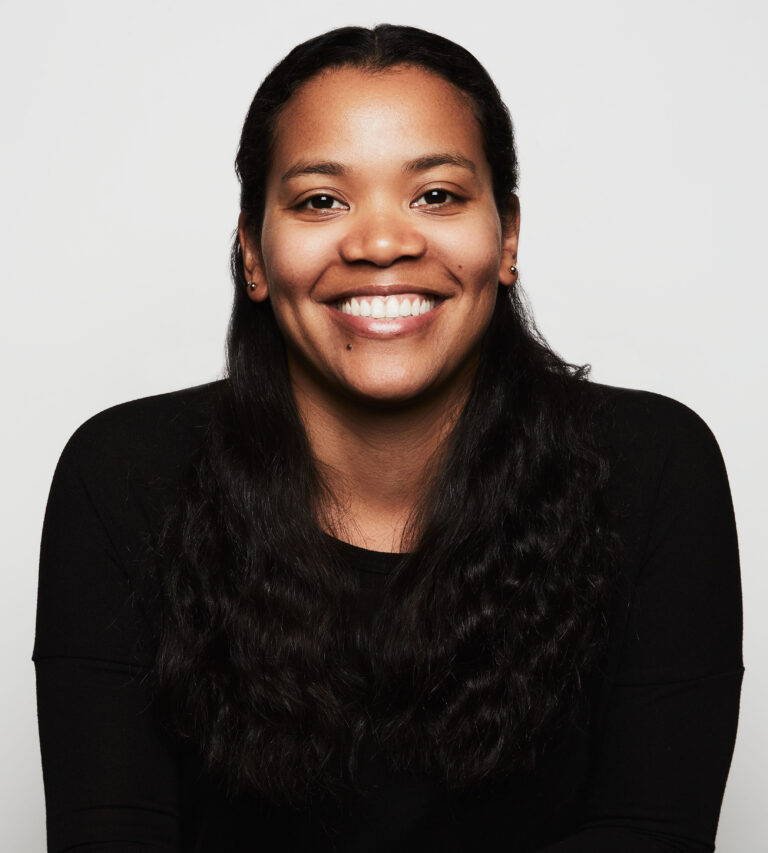
Introducing Mandy Howard
In February I joined Foundry as an Investor to identify and evaluate investment opportunities in our Partner Fund portfolios and continue to grow Foundry’s network of entrepreneurs and investors. I wanted to introduce myself and share what led me here. Curiosity, resourcefulness, and patience.
The pandemic brought on a lot of reflection for me like many others. On July 7, 2020, I began writing about why I wanted to invest. For a few years leading up to this point, I often wondered if my startup experience and eventually my product management experience could be helpful to founders and their teams. I decided I wanted to leverage my unique path and perspective to increase accessibility and be a resource. The more digging I did, I began to learn of other operators who had transitioned into VC. And hearing Lo Toney share his belief that product management was the best path to VC was a confidence boost as well.
I studied biology in college and spent the first decade of my career in life sciences across sales, systems consulting, and tech. The latter half of that time provided so much exposure to career avenues I didn’t know existed. In July 2013, I relocated from Los Angeles (home) to Silicon Valley to be the first “non-technical” hire at a 12-person startup, Comprehend Systems (acquired by Saama Technologies, Inc). In my first week in the garage (our office was in a Palo Alto garage behind a house across the street from the University Ave. Caltrain), the company announced its Series A led by Sequoia. In that moment, I didn’t fully understand the signal or the milestone but over time, as the company continued to be funded during my five-year tenure, I began to wonder how investors made these decisions. At the same time, I was exposed to product management for the first time and decided that function seemed like a great fit for me. To me, product is where business and technology meet.
Five years later to the day, I moved back to LA to join ServiceTitan as a product manager focused on growth through strategic partner integrations. The company was in hypergrowth and raised (at the time) the largest VC round in Southern California in the fall of 2018. My antennas went up again; $165M is not a light decision. The following fall of 2019 I organized and facilitated Startup Weekend South Central with a few fellow Black techies. I knew returning to LA I wanted to get plugged into the tech ecosystem, but I could not have imagined a better way to do it and didn’t anticipate the feelings of fulfillment and reward that came from the weekend. I also met some amazing people in the community and the broader tech ecosystem including some who believed I’d make a great investor.
In a little over 3.5 years at ServiceTitan, I drove and owned API-driven supply chain products partnering with business development and external industry suppliers. Outside of being a PM, I co-founded ServiceTitan’s ERG for Black employees and helped guide and support other newly formed ERGs.
I spent much of my time in the last two years as a Black Venture Institute Fellow, co-hosting virtual brunches for founders, completing VC University, as a BLCK VC Scout Network member, investing in pre-seed and seed-stage companies as part of Bonfire Ventures’ FireStarter program, and as an active member and programming lead for Black Product Managers Network (BPM). I have had so much support and encouragement in forging this path for myself. I’m energized for this next chapter of exploration, learning, and being a resource.
I am grateful and thrilled to be part of a stellar and well-respected team with shared values that likes to have fun and give first. I am based in Los Angeles and will spend lots of time in Boulder (fun fact: my brother is a CU grad!). I look forward to continuing to meet the great humans within the Foundry network. You can reach me at mandy@foundrygroup.com.
Special shoutout to Austin Clements of Slauson & Co. and the Bonfire Venturesteam (both are Foundry partner funds) — thank you!
Our Investment in 8base
Standing up and managing full stack software development teams is hard and can be expensive. Founders are faced with a near endless set of decisions when building their technology platforms. 8base is making it easier and faster to write and deploy code with its suite of low-code tools for building data models, custom logic, APIs, connections to external systems, cloud-based hosting, security, authentication, and frontend applications. Many no-code and low-code solutions are great for prototyping but don’t scale for enterprise needs. 8base offers all the benefits of low-code with the tremendous benefit of supporting scaled enterprise solutions too.
Gartner reports that by 2024, 65% of software applications will be built using low-code tools. 8base’s API- first, three- tier, serverless architecture and compatibility with popular languages make it a great choice for developers looking for a product that will scale effectively as their teams grow. Backend tools include a visual data schema builder, database configuration aids, and spreadsheet- like data views to give technical staff everything they need to deploy agilely. 8base also facilitates simple frontend development with a powerful drag-and-drop interface that connects to any backend.
We were introduced to 8base by Amos Schwartzfarb, Managing Director for Techstars Austin, after 8base successfully completed the Techstars Austin program. 8base Founder & CEO, Albert Santalo, is a proven entrepreneur. Prior to 8base, Albert was chairman and CEO of CareCloud. He is driven and resourceful, and he has assembled a nimble and scrappy team based in Miami, Florida. We were thrilled to have the opportunity to lead their recent Series A financing alongside Techstars, Firebrand Ventures, and 11 Tribes Ventures.
Our Investment in FloatMe
Most Americans live without an adequate financial safety net. According to a 2021 Bankrate survey, 25% have no emergency savings at all, and it’s estimated that as much as 69% of the population has less than $1,000 in savings. There are many reasons for this. Stagnant wages, increased cost of living, student loan debt, and exploding healthcare costs are all contributing factors. The COVID-19 pandemic has further exacerbated the situation. Many people with unexpected bills end up turning to credit cards or high interest, short-term loans to solve their immediate financial problems. FloatMe provides an alternative.
Launched in 2020, FloatMe offers its members interest-free, short-term “Floats” up to $50, along with overdraft protection and other financial literacy tools. For a small monthly fee ($1.99), customers can link their bank accounts to the app to track spending and contribute to savings. Floats are low-dollar amounts by design, to prevent over-borrowing, which creates a vicious cycle in which compounding interest and aggressive repayment schedules require a borrower to take the same loan repeatedly.
The FloatMe team
Co-founder and CEO, Josh Sanchez, is deeply committed to helping people cultivate smart financial habits that build security and ultimately wealth. His personal experience with taking a bad loan that resulted in overdraft fees informs his passion for what FloatMe is building. Unlike many companies operating in the payday advance space, FloatMe’s mission is to move its members away from needing short-term loans on an ongoing basis and expand their capabilities in managing their money.
Financial wellness is a growing industry, and tech-enabled financial wellness even more so. Both individual consumers and employers are seeing the need for tools that make managing personal finances intuitive and accessible. The market for these services is expected to surpass $800M by 2024. Platforms like FloatMe that empower consumers are well-positioned to capture a meaningful share of that.
Josh has shown tremendous resourcefulness and grit in getting FloatMe off the ground. He participated in two incubators, ran an Indiegogo campaign, and was awarded a grant by Venture for America in 2019. Our recent Series A investment, made alongside ManchesterStory, Active Capital, Michal Cieplinski (Chief Business Officer, Pipe), Jordan Wright (Co-founder & CEO, Atomic), and John Henry Matos (CEO, LOOP, a Foundry portfolio company) will allow Josh to scale the team and continue to build products and services for the FloatMe community. We couldn’t be happier to partner with him as he works to make FloatMe the “Best Financial Friend” for more and more Americans in need of financial wellness.